No solar
35.4 hUntil first interruption- Conservative
- 27.8 h
- Battery at target
- 48%
Covers the conservative case
Size a portable plug-in setup for everyday appliances, without treating it as a permanent vehicle electrical installation.
For the full Camper profile (12 V cooler, laptop, lights and coffee maker, using the calculator’s schedules), the smallest catalogued station that covers 24 hours even with 25% higher consumption is the Jackery Explorer 2000 v2 (2,042 Wh): ≈34.6 h in the typical case.
Calculate with my devicesAn induction hob or kettle may use modest daily energy when run briefly, yet require high continuous AC power. A compressor cooler has a different pattern: lower running draw but long availability and startup events. The planner lets you place these uses on the clock and keep critical loads separate. This portable-device tool does not design shore-power wiring, vehicle chargers or transfer switching.
Two illustrative planning examples for a camper. The capacity columns include conversion losses, a 10% battery reserve and 25% higher device consumption. These are energy budgets, not measured tests or product recommendations.
| Example setup | Device energy / day | Nominal battery · 24 h | Nominal battery · 48 h |
|---|---|---|---|
| Cooler, phone and lights | 448 Wh | 730 Wh | 1,459 Wh |
| Camper with laptop and coffee | 868 Wh | 1,471 Wh | 2,942 Wh |
Cooler: 45 W for 24 h at a 35% duty cycle, using the DC model. Phone: 10 W for 2 h from 19:00. Lights: 10 W for 5 h from 18:00. The full Camper profile replaces the phone with a 45 W laptop for 6 h from 09:00 and a 1,000 W coffee maker for 0.17 h from 08:00. Phone, lights, laptop and coffee use the AC model.
Full starting charge, no solar or recharge, 85% AC efficiency, 8 W inverter consumption whenever an AC device is scheduled and 92% DC efficiency. The required nominal capacity is simulated battery energy at 25% higher device draw divided by 0.90. Values are rounded up to whole Wh. Wattage, duty cycles and loss figures are assumptions to replace with your own measurements.
Check continuous output, motor startup and DC/USB compatibility separately. The calculator below opens the full Camper profile; edit its devices and schedules to match your trip.
It depends on your measured loads and the time between charges. Compare your daily energy with the examples on this page, then check output power and connections separately. A capacity figure alone cannot establish that a setup will work.
Short use can consume relatively little energy while still demanding high continuous output. Enter the appliance’s input watts and actual minutes of use. Check the exact station and appliance manuals; a large battery does not necessarily have a powerful enough inverter.
No. They start with a full battery and include no recharging. Add solar in the planner to compare generation on the same timeline, including nighttime and cloudy conditions.
This page sizes portable power for plug-in appliances. It does not specify a vehicle installation, shore-power connection, alternator charging or transfer switching. Those require the appropriate equipment documentation and installation design.
Pick your appliances and see, hour by hour, how long a portable power station keeps them running — with or without solar — and which model fits your budget.
The essentials for a quick backup plan.
Starting values are editable. Adjust watts, daily hours and quantities in your list.
Your plan runs on stored battery energy only.
Station weight limit: 30 kg. Other preferences remain active.
Scenario range: 27.8–48.1 h, with −20% / +25% device draw. 168+ means no interruption within the seven-day simulation.
BLUETTI Elite 200 V2 · 24 h target · 400 W solar configuration
Covers the conservative case
Covers the conservative case
Covers the conservative case
Solar columns are comparison scenarios. Turn on solar charging to include generation in your main plan.
Same devices, battery, starting charge and schedule. Cloudy uses 50% of the local monthly solar profile. Historical or estimated local profile; not a forecast. 168+ is the simulation limit.
Prices change often: confirm the final price, delivery and taxes in the store.
Suggestions preserve critical loads and do not change medical device settings.
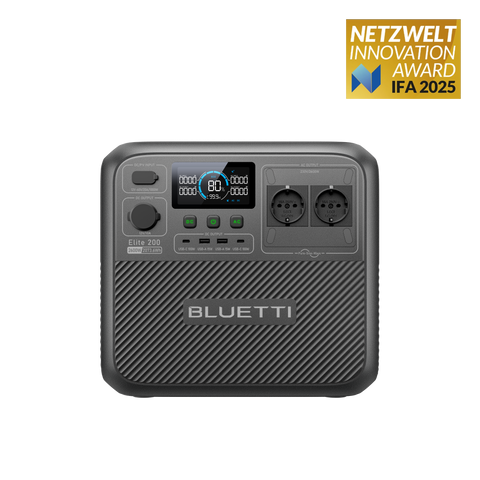
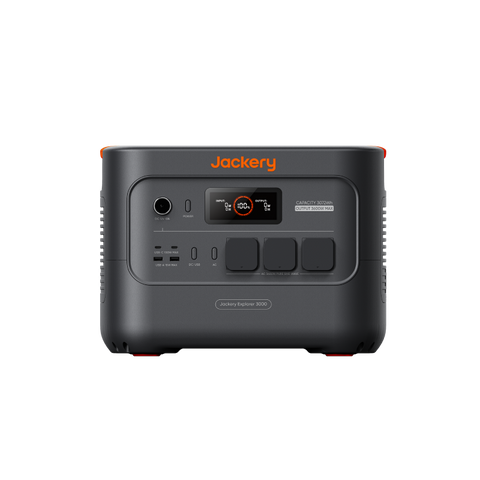
Categories use the conservative runtime estimate and known item subtotals. Known cable and accessory costs are included; unpriced items remain pending. If an option wins more than one category, its labels are combined.
Save your scenario, share a link or print your backup checklist.
Battery only, full charge, 10% reserve and the planner’s default losses. Example load: 45 W running, 35% duty cycle, DC output.
| Power station | Capacity | Estimated runtime | days |
|---|---|---|---|
| EcoFlow RIVER 2 | 256 Wh | 13.5 h | ≈ 0.6 |
| EcoFlow RIVER 3 Plus | 286 Wh | 15 h | ≈ 0.6 |
| Jackery Explorer 300 Plus | 288 Wh | 15.1 h | ≈ 0.6 |
| Jackery Explorer 500 v2 | 512 Wh | 26.9 h | ≈ 1.1 |
| EcoFlow RIVER 2 Max | 512 Wh | 26.9 h | ≈ 1.1 |
| EcoFlow RIVER 2 Pro | 768 Wh | 40.4 h | ≈ 1.7 |
| BLUETTI AC70 | 768 Wh | 40.4 h | ≈ 1.7 |
| BLUETTI AC70P | 864 Wh | 45.4 h | ≈ 1.9 |
| Anker SOLIX C1000 Gen 2 | 1,024 Wh | 53.8 h | ≈ 2.2 |
| BLUETTI Elite 100 V2 | 1,024 Wh | 53.8 h | ≈ 2.2 |
| EcoFlow DELTA 2 | 1,024 Wh | 53.8 h | ≈ 2.2 |
| EcoFlow DELTA 3 Plus | 1,024 Wh | 53.8 h | ≈ 2.2 |
| EcoFlow DELTA 3 | 1,024 Wh | 53.8 h | ≈ 2.2 |
| Jackery Explorer 1000 v2 | 1,070 Wh | 56.3 h | ≈ 2.3 |
| Jackery Explorer 1000 Plus | 1,264 Wh | 66.5 h | ≈ 2.8 |
| Jackery Explorer 2000 v2 | 2,042 Wh | 107.4 h | ≈ 4.5 |
| Jackery Explorer 2000 Plus | 2,043 Wh | 107.4 h | ≈ 4.5 |
| EcoFlow DELTA 2 Max | 2,048 Wh | 107.7 h | ≈ 4.5 |
| BLUETTI AC200L | 2,048 Wh | 107.7 h | ≈ 4.5 |
| BLUETTI Elite 200 V2 | 2,074 Wh | 109 h | ≈ 4.5 |
| Jackery Explorer 3000 v2 | 3,072 Wh | 161.5 h | ≈ 6.7 |
| EcoFlow DELTA Pro 3 | 4,096 Wh | ≥ 168 h | ≥ 7 |
Planning estimates from the same engine as the calculator, not laboratory tests. Your device’s real consumption decides the result: measure it or read its label and edit it above. The model stops at 168 hours.
It mostly depends on whether you cook or heat/cool with electricity. For a fridge, lights, phones and a laptop, 1–2 kWh is usually enough: with just the example 12 V cooler, a DELTA 3 gives about 53.8 h. An induction hob or kettle also needs 1,500–1,800 W of continuous output.
Many stations accept 12 V car-socket charging or a dedicated alternator charger. Charging power varies a lot by model and vehicle, so check the station’s manual.
No. This planner covers plug-in devices and a portable system. It does not design fixed wiring, vehicle chargers or shore-power switching.