No solar
26.6 hUntil first interruption- Conservative
- 25.2 h
- Battery at target
- 29%
Covers the conservative case
Keep your laptop, monitor and connectivity running for the workday, with a plan for evening recharge.
For our example (Laptop, 45 W average), the smallest catalogued station that covers 8 hours even with 25% higher consumption is the EcoFlow RIVER 2 Pro (768 Wh): ≈11.3 h in the typical case.
Calculate with my devicesChoose actual average consumption when known. Video calls, external monitors and charging an empty laptop battery change the load. USB-C power delivery can avoid an AC conversion step, but requires a supported power profile and cable. If uninterrupted operation matters, check the exact station’s UPS/EPS switching behaviour and test it with your equipment. A quoted switch time is not a universal guarantee.
The example device is already added. Edit its watts and hours, add anything else you need and compare stations, solar and budget.
The essentials for a quick backup plan.
Starting values are editable. Adjust watts, daily hours and quantities in your list.
Your plan runs on stored battery energy only.
Station weight limit: 30 kg. Other preferences remain active.
Scenario range: 25.2–28.2 h, with −20% / +25% device draw. 168+ means no interruption within the seven-day simulation.
Jackery Explorer 500 v2 · 24 h target · 400 W solar configuration
Covers the conservative case
Covers the conservative case
Covers the conservative case
Solar columns are comparison scenarios. Turn on solar charging to include generation in your main plan.
Same devices, battery, starting charge and schedule. Cloudy uses 50% of the local monthly solar profile. Historical or estimated local profile; not a forecast. 168+ is the simulation limit.
Prices change often: confirm the final price, delivery and taxes in the store.
Only critical or important devices are selected. Add solar or a larger battery to extend this plan.
Suggestions preserve critical loads and do not change medical device settings.
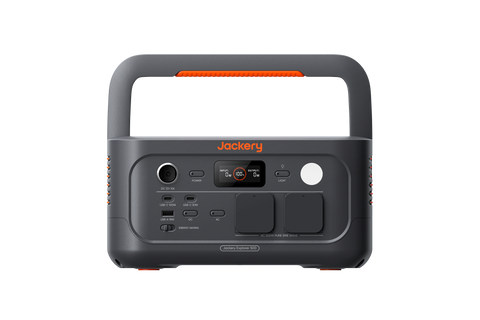
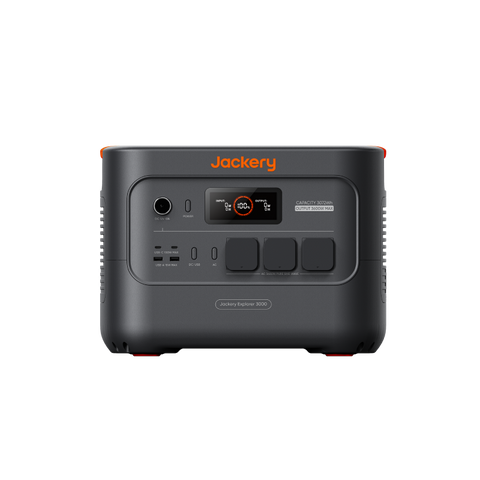
Categories use the conservative runtime estimate and known item subtotals. Known cable and accessory costs are included; unpriced items remain pending. If an option wins more than one category, its labels are combined.
Save your scenario, share a link or print your backup checklist.
Battery only, full charge, 10% reserve and the planner’s default losses. Example load: 45 W running, AC output.
| Power station | Capacity | Estimated runtime | workdays (8 h) |
|---|---|---|---|
| EcoFlow RIVER 2 | 256 Wh | 3.8 h | ≈ 0.5 |
| EcoFlow RIVER 3 Plus | 286 Wh | 4.2 h | ≈ 0.5 |
| Jackery Explorer 300 Plus | 288 Wh | 4.3 h | ≈ 0.5 |
| Jackery Explorer 500 v2 | 512 Wh | 7.6 h | ≈ 0.9 |
| EcoFlow RIVER 2 Max | 512 Wh | 7.6 h | ≈ 0.9 |
| EcoFlow RIVER 2 Pro | 768 Wh | 11.3 h | ≈ 1.4 |
| BLUETTI AC70 | 768 Wh | Startup to verify | — |
| BLUETTI AC70P | 864 Wh | Startup to verify | — |
| Anker SOLIX C1000 Gen 2 | 1,024 Wh | 15.1 h | ≈ 1.9 |
| BLUETTI Elite 100 V2 | 1,024 Wh | Startup to verify | — |
| EcoFlow DELTA 2 | 1,024 Wh | 15.1 h | ≈ 1.9 |
| EcoFlow DELTA 3 Plus | 1,024 Wh | 15.1 h | ≈ 1.9 |
| EcoFlow DELTA 3 | 1,024 Wh | 15.1 h | ≈ 1.9 |
| Jackery Explorer 1000 v2 | 1,070 Wh | 15.8 h | ≈ 2 |
| Jackery Explorer 1000 Plus | 1,264 Wh | 18.7 h | ≈ 2.3 |
| Jackery Explorer 2000 v2 | 2,042 Wh | 30.2 h | ≈ 3.8 |
| Jackery Explorer 2000 Plus | 2,043 Wh | 30.2 h | ≈ 3.8 |
| EcoFlow DELTA 2 Max | 2,048 Wh | 30.2 h | ≈ 3.8 |
| BLUETTI AC200L | 2,048 Wh | Startup to verify | — |
| BLUETTI Elite 200 V2 | 2,074 Wh | Startup to verify | — |
| Jackery Explorer 3000 v2 | 3,072 Wh | 45.4 h | ≈ 5.7 |
| EcoFlow DELTA Pro 3 | 4,096 Wh | 60.5 h | ≈ 7.6 |
Planning estimates from the same engine as the calculator, not laboratory tests. Your device’s real consumption decides the result: measure it or read its label and edit it above. The model stops at 168 hours.
With an example 45 W laptop on AC, a small station such as the Jackery Explorer 300 Plus gives about 4.3 h, and a ~500 Wh unit such as the Explorer 500 v2 about 7.6 h. An external monitor and the router add a lot: put them in the planner.
If your computer must not switch off when the power drops, look for a station with a claimed UPS/EPS switchover and test it with your equipment. A quoted switch time does not guarantee compatibility with every device.
Usually yes, because it avoids converting to AC and back to DC in the charger. It needs a USB-C port with a Power Delivery profile your laptop accepts and a suitable cable.